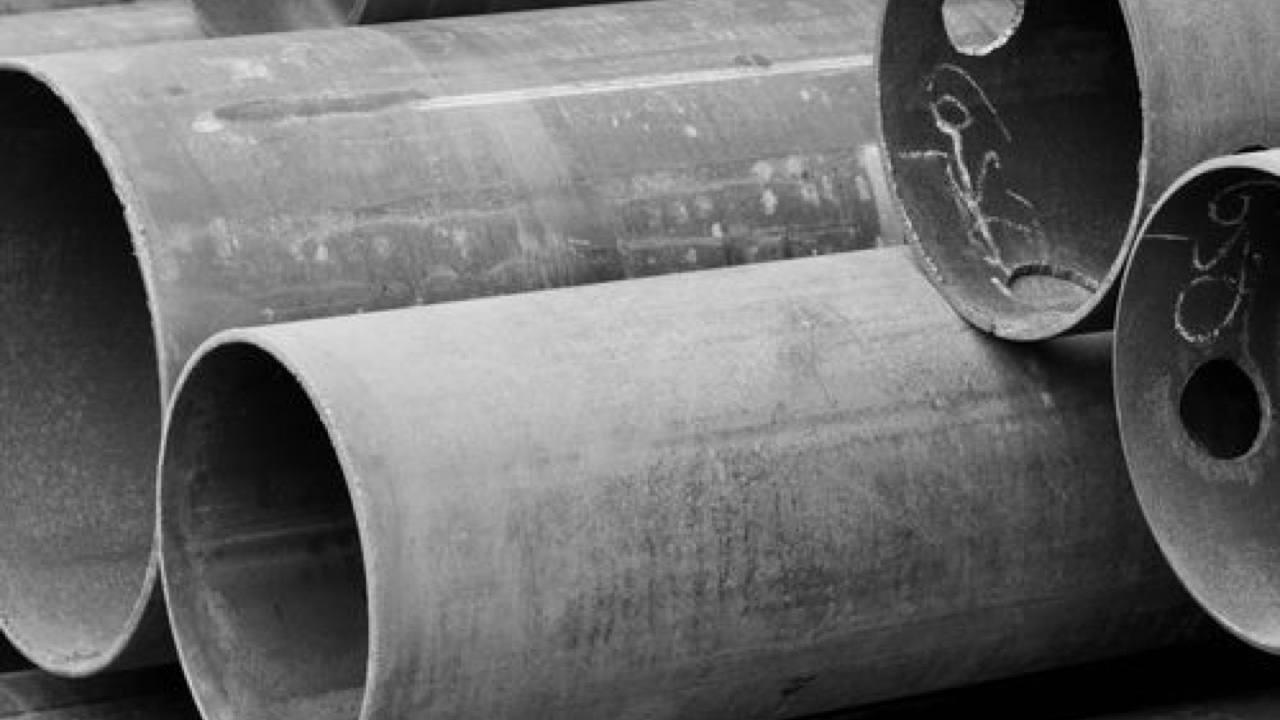
Material substitutions on construction sites happen for predictable reasons: the specified product is on a long lead time, a supplier has the alternative in stock, and the project schedule won’t wait. When the substitution is from EN 10210 hot-finished hollow sections to EN 10219 cold-formed hollow sections, the conversation usually goes something like this: same grade, same dimensions, same nominal strength — what’s the problem?
The problem is that the two standards produce structurally different products despite identical nominal designations, and the differences matter in ways that aren’t visible from the outside of the tube.
Why They Look the Same but Aren’t
Both EN 10210 and EN 10219 cover structural steel hollow sections — square, rectangular, and circular — in grades from S235 up to S460. The outside dimensions and wall thicknesses are defined by the same dimensional standards (EN 10210-2 and EN 10219-2 reference the same size tables for most profiles). A 200×200×8 S355 section to either standard will measure 200mm × 200mm with an 8mm nominal wall. Visually and dimensionally, they’re indistinguishable.
The manufacturing process is the difference. EN 10210 covers hot-finished sections — the tube is formed and welded (or seamlessly formed) and then reheated above the transformation temperature and allowed to cool, which relieves the residual stresses from forming, homogenizes the microstructure, and produces rounded corners with consistent properties throughout the cross-section. EN 10219 covers cold-formed sections — formed from strip at room temperature, with residual stresses from the cold-forming process still present in the finished product, particularly concentrated in the corners.
The Structural Parameters That Actually Change
When a structural engineer designs a connection using EN 10210 hollow sections, several parameters are based on the assumptions that apply to hot-finished product. Substituting EN 10219 doesn’t automatically invalidate the design, but it does require checking each of these.
Corner radius. EN 10210 hot-finished sections have a nominal outer corner radius of 1.5t (where t is wall thickness). EN 10219 cold-formed sections have a larger corner radius, typically around 3t. The corner radius affects the section properties — the flat face width, from which weld lengths and connection geometry are measured, is slightly shorter in a cold-formed section of the same nominal dimension. For most connections this difference is small, but for tube-to-tube welded joints designed to the effective width rules in Eurocode 3 Chapter 7, the flat face dimension is a direct input to the resistance calculation.
Corner properties. Cold-forming work-hardens the corner material. The yield strength in the corner zone of an EN 10219 section is higher than the nominal grade yield strength — Eurocode 3 actually permits this increased strength to be used in design when certain conditions are met. But the increased strength comes with reduced ductility. Charpy impact values in the corner zone of cold-formed sections are lower than in the flat faces, which is why EN 10219 requires that impact testing be performed on flat face specimens rather than corner specimens.
Residual stress state. Hot-finished sections have low residual stresses because the heat treatment after forming allows the material to relax. Cold-formed sections retain residual stresses from the forming process, which are tensile on the outer surface of the corners and compressive on the inner surface. For members in compression or fatigue-sensitive applications, residual stresses interact with applied stresses in ways that the structural design may not have accounted for if it assumed hot-finished product.
Allowable stress tables. ASME and European code allowable stress tables sometimes distinguish between hot-finished and cold-formed product. In EN 1993-1-1, the design rules for compression members include a buckling curve selection that depends partly on whether the section is hot-finished or cold-formed. For Class 1 and Class 2 cross-sections in bending, this typically doesn’t change the calculation, but for slender sections or cold-formed sections with elevated residual stresses, the buckling curve selection can affect the member resistance.
When the Substitution Is Actually Safe
Substituting EN 10219 steel tube specification for EN 10210 is straightforward to justify in some situations and genuinely problematic in others.
The substitution tends to be safe for: secondary structural members not carrying primary loads, members in tension rather than compression (residual stress effects are much smaller), connections designed with conservative effective width assumptions that don’t depend on precise corner geometry, and applications without low-temperature Charpy requirements where the corner zone toughness reduction doesn’t matter.
The substitution requires more careful checking for: compression members where the buckling curve selection changes, hollow section connections designed to the exact Eurocode 3 Chapter 7 joint resistance rules, applications with sub-zero design temperatures where the grade toughness designation was selected to ensure adequate Charpy values in the welded zone, and any situation where the design explicitly assumed hot-finished residual stress levels.
What the Site Team Gets Wrong in Practice
The most common error I’ve seen isn’t a failure to check the structural parameters — experienced engineers usually know to verify those. The most common error is the assumption that because the grade and dimensions match, the substitution is automatically approved by the engineer of record without formal review.
On a project I worked on, a steel subcontractor substituted EN 10219 S355J2H for EN 10210 S355J2H on a set of column sections. The nominal properties were equivalent, the dimensions matched, and the subcontractor marked the substitution as “like-for-like” on the material submittal without flagging it for structural review. The engineer of record caught it during a site visit when they noticed the EN 10219 designation on the MTRs and asked why cold-formed sections were being used where hot-finished had been specified.
The review ultimately confirmed the substitution was acceptable for those particular members — they were in predominantly axial tension and the connection geometry had adequate tolerance for the corner radius difference. But confirming it took three days of calculation review and a formal design variance document. If the substitution had involved primary compression members or moment-resisting connections, the outcome could have been different.
The Right Process
A substitution from EN 10210 to EN 10219 is a design change, not a materials procurement decision. It should go through the same review and approval process as any other design change: proposed by the contractor with supporting documentation, reviewed by the structural engineer with specific checks against the design assumptions, and formally approved before the material is incorporated into permanent works.
The documentation package for the substitution should include the MTRs for the EN 10219 material, confirmation of the grade and toughness designation, a statement of which structural members are affected, and the engineer’s check confirming that the cold-formed properties are acceptable for those specific applications. That’s not a lot of paperwork — but it’s paperwork that prevents the much larger effort of identifying and replacing non-conforming structural members after they’ve been welded into place.